 EN
EN  IT
IT  FR
FR  DE
DE  ES
ES The business context
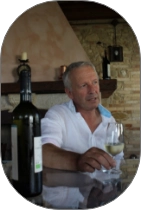
Luca Gelmini runs a small farm with a non-main but nevertheless strategic wine-growing activity: produces grapes that are given to the wineries in the area for the production of Trento Doc.
In an area such as Trentino, where climate change can have a decisive impact on the season, plant health management requires attention, timeliness and reliable tools.
The search for a useful tool
Luca says he discovered Safe vineyard for the first time on Instagram, while he was looking for predictive models, in particular for the peronospora.
His need was very clear: find practical support to monitor the risk of development of the disease, Especially in an area where the peronospora is a more frequent problem than theoidium.
Why monitoring makes the differenza
In recent years, Luca explains, the long periods of rain have repeated themselves with a certain regularity. In this scenario, the ability to interpret meteorological data becomes essential to intervene at the right time and arrive at the harvest with quality grapes.
Safe vineyard, in his experience, allows to collect weather data and turn them into useful information to understand if there is a risk of a primary infection or if you have already moved to a secondary phase.
Help in choosing the right time
One of the most appreciated aspects is the possibility of comparing different situations, even between vineyards located in different positions. This provides an additional element to confirm the need to treat or, in some cases, the possibility of postponing the intervention.
Technology, in this sense, does not replace the experience of the winegrower, but supports and strengthens it.
The value of experience in the field
Luca points out that the practical experience of the farmer remains important. The value of the system, therefore, is not in replacing human judgment, but in providing additional support, based on objective data, which helps to make more informed decisions.
Full Testimony
So, I have a small company, I do it like this, not as a main job: I only produce grapes that I then sell to wineries here in the area to produce Trento Doc.
I first saw them on Instagram, roughly, if I remember correctly. At that time I was looking for predictive models, especially for downy mildew, because it is precisely the area that is more likely to develop downy mildew problems than oidium.
Usually, in recent years, long periods of rain have always occurred, so being able to manage them becomes essential to then be able to get to harvest with a quality product.
Your system allows you to collect meteorological data that then, based on those, clearly understands if there is a risk that a primary will develop or that from the primary you will move to the second, and this is fundamental in short to be able to understand, say, the severity of the moment.
Even in different vineyards, different places, that is, an extra element is always available that confirms the need to treat or the possibility of delay. Experience, let’s say, and the farmer’s practice also matters.